Making the workplace safe for employees living with HIV
The recent promising news about Covid-19 vaccines is in sharp contrast to the absence of a vaccine for HIV, despite decades of research. Unlike Covid-19 with a single viral isolate that shows minimal diversity, HIV circulates in a wide range of strains that so far have proven impervious to a single vaccine. Fortunately, more people […]

Call for Code for Racial Justice Needs You: Join the Movement
IBM has never avoided taking on big challenges. At IBM, we are privileged to drive impact at scale. We take on challenges that transform our clients, impact people’s lives and innovate for future generations as we strive to effect systematic societal change. Over the course of our 109-year history, the evidence has become clear that […]

A New Wave: Transforming Our Understanding of Ocean Health
Humans have been plying the seas throughout history. But it wasn’t until the late 19th century that we began to truly study the ocean itself. An expedition in 1872 to 1876, by the Challenger, a converted Royal Navy gunship, traveled nearly 70,000 nautical miles and catalogued over 4,000 previously unknown species, building the foundations for modern […]

Fixing the Mismatch Between Skills and Jobs: A Pilot Project to Test Learning and Employment Records
Over the last few years, employers have become less interested in which educational degrees people have and more interested in what actual skills they possess. But there’s one challenge with that: It’s hard to know what skills someone truly has. IBM has come together with an important group of organizations to address this challenge. All […]
Words Matter: Driving Thoughtful Change Toward Inclusive Language in Technology
Words shape our worldview, how we regard others, and how we make others feel. Right now, in the midst of a health and societal crisis, we are at a pivot point where people are willing to not only talk about our hard-wired issues of systemic racism and bias but to take action. While common expressions […]
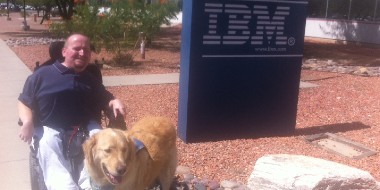
ADA at 30: Colleagues With Diverse Abilities Make Us All Stronger
Thirty years ago, three thousand people gathered on the lawn of the White House to watch President George H.W. Bush sign legislation that finally, after years of struggle, gave people with diverse abilities equal rights and access. With the signing of the Americans with Disabilities Act (the ADA) on July 26, 1990, daily life promised […]

Gender Pronouns: How Small Words Make a Big Difference
What’s in a pronoun? Does he, him, his not apply to every person who is perceived as a male? Or she, her, hers to a perceived female? In our non-binary world, they do not. For non-binary or genderqueer individuals, and those who relate to gender in a fluid way, to be misgendered can be a […]

30 Years and Counting: Why IBM’s Environmental Report Matters More Than Ever
As we publish the 30th edition of IBM’s annual corporate environmental report, the world is in crisis: we are in the midst of a pandemic, a global economic contraction, and the heartbreaking persistence of racial inequality. In times like these, it would be easy for business leaders to neglect their responsibility for environmental protection, including […]

Shifts in U.S. Consumers’ Preferences Amid COVID-19 Make Business Agility Essential
As we move through the pandemic, and states and businesses in the United States begin to carefully re-open, U.S. consumers’ attitudes toward life and work are continuing to evolve, according to new research from the IBM Institute for Business Value (IBV). The IBV polled more than 18,000 U.S. adults in May and early June to […]
Taking on Racism With Call for Code Employee Challenge
The events and reactions sparked by the recent killings in the United States are a reminder of the urgency of dealing with systemic racism. IBM is taking action and increasing efforts to ensure technology is used appropriately and productively to deal with racial inequality, beginning with an internal Call for Code Emb(race) Spot Challenge for […]

Creating a New Path to Digitalization for the Mining Industry
In the current economic climate, many companies are naturally trying to work out priorities for their business strategies and decide how to best leverage opportunities as countries move into the recovery phase. The COVID-19 pandemic has shone a light on digitalization and how it can help provide cost efficiencies, speed up delivery of products and […]
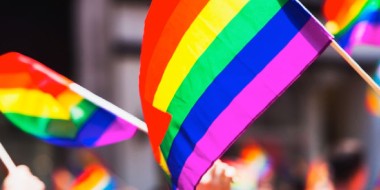
The Supreme Court Decision Is a Landmark. Let’s Take the Next Steps Toward Full Inclusion.
The Supreme Court’s landmark decision on Monday, that the 1964 Civil Rights Act protects LGBT+ employees from workplace discrimination, was a watershed event for the LGBT+ community and our allies nationwide. For IBMers, it feels like the world is finally making progress on an issue we have been focused on for decades. Since 1984, when sexual […]